Choosing a TCM clinic system: what a Hong Kong clinic needs
A TCM clinic system brings appointments, records, prescribing, herb inventory, receipts and reports into one place, so consultations and the front desk run on the same system. This guide covers what Hong Kong TCM clinics weigh up when choosing one, with screens from the current version of Medicloud CMS as examples.
What a TCM clinic system is, and who it suits
A TCM clinic system is software built around the daily work of a Chinese medicine clinic. Unlike general clinic software, it handles what TCM needs: prescriptions written in herbs and grams, tongue and pulse findings, acupoints, and stock of decoction pieces and granules.
A solo practitioner saves the time spent handwriting records, filling in receipts and counting herbs. A clinic with several practitioners or branches sees appointments, records and revenue in one place, so partners and managers always have the current picture.
Clinics still on paper or spreadsheets usually find old records hard to look up, restock from memory and write every receipt and certificate by hand. A clinic system records all of this as part of the consultation, ready to look up later.
Medicloud CMS is cloud TCM clinic management software built for Hong Kong clinics. The sections below use its screens to show what each feature looks like in daily use.
In the consultation: prescribing, records and acupuncture
Practitioners spend most of their day prescribing and writing records, so how smoothly this works decides whether a system gets used.
-
Fast, accurate prescribing
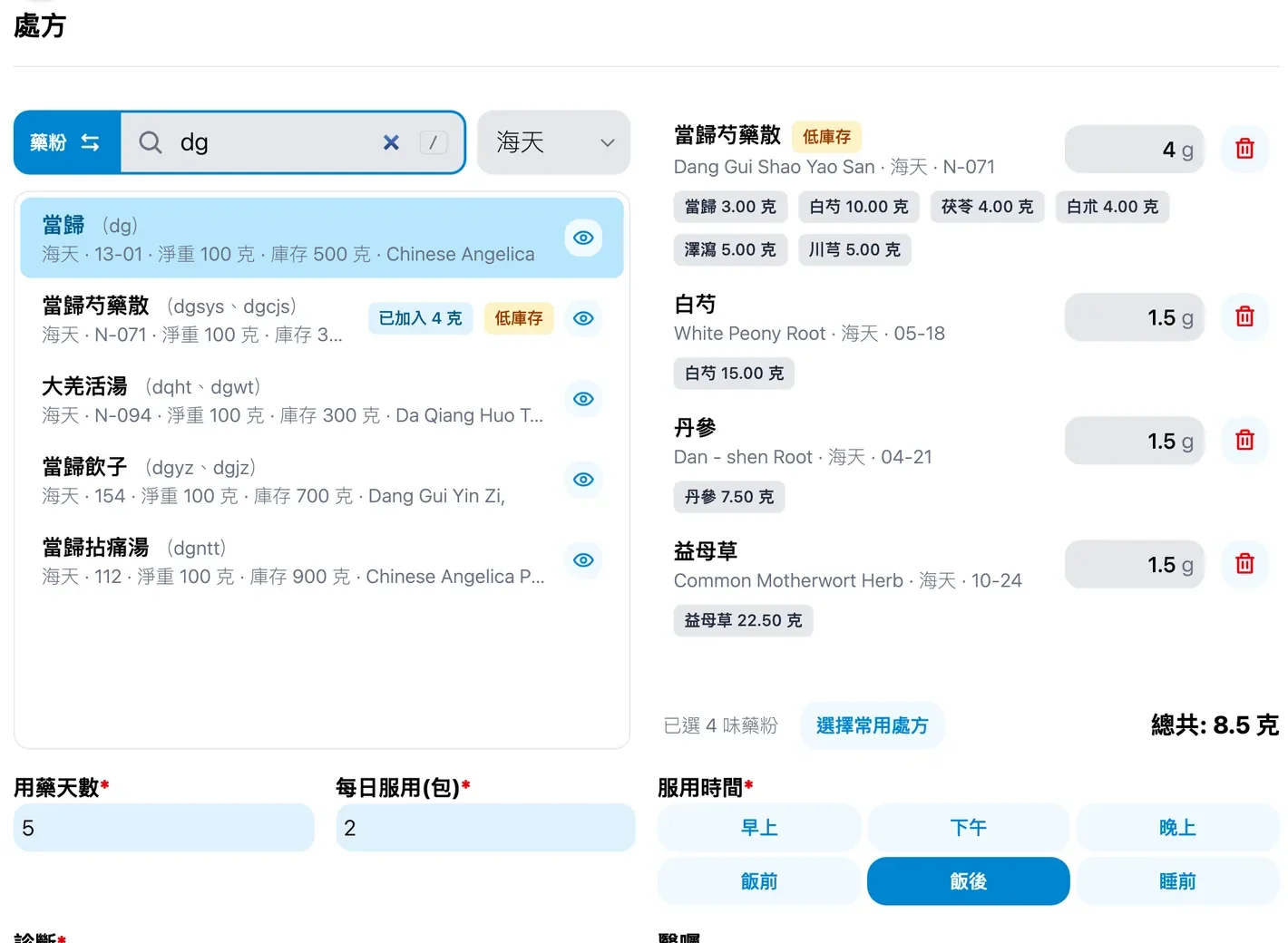
Practitioners should find herbs by name or pinyin, enter grams, and have days, packs and total grams worked out. In Medicloud, the initials of the Mandarin pinyin or the Cantonese Jyutping both find an herb, Enter adds it, and the cursor stays in the search box for the next one. Common prescriptions load in one click.
-
Safety prompts
A prescription should be checked for the eighteen incompatibilities and nineteen antagonisms. Medicloud lists the warnings above the chosen drugs, highlights the drugs concerned and asks for confirmation before saving.
-
TCM fields in the record
Records should cover chief complaint, tongue, pulse, pattern and treatment principle, start a follow-up from a past record, and flag history and allergies beside the patient's appointment.
-
Acupoint selection
Clinics offering acupuncture should check that points can be picked by meridian or on a body map, marked left, right or both. Medicloud has 409 points to choose from either way.
At the front desk: receipts, stock, branches and reports
Beyond the consultation, reception and managers handle billing, restocking and figures every day. When these live in the same system as prescribing, nothing is entered twice.
-
Receipts and certificates
Receipts should itemise consultation, herbs and treatments, and the system should print insurance invoices and sick-leave and attendance certificates. Medicloud adds the clinic chop and the practitioner's e-signature to prescriptions and receipts: the practitioner sets up a signature once and presses Sign on the print page.
-
Herb stock linked to prescribing
Saving a prescription should deduct stock and warn when an item runs low. Medicloud works out how many days each item will last at its recent usage, drafts orders to the clinic's own suppliers with suggested quantities to send by WhatsApp, email or print, and Receive stocks the goods in.
-
Several branches on one account
Clinics with branches should manage them with one login. In Medicloud, staff switch clinic from the top bar, admins copy patients with their past records to another branch, and stock and reports are kept per clinic.
-
Revenue and practitioner reports
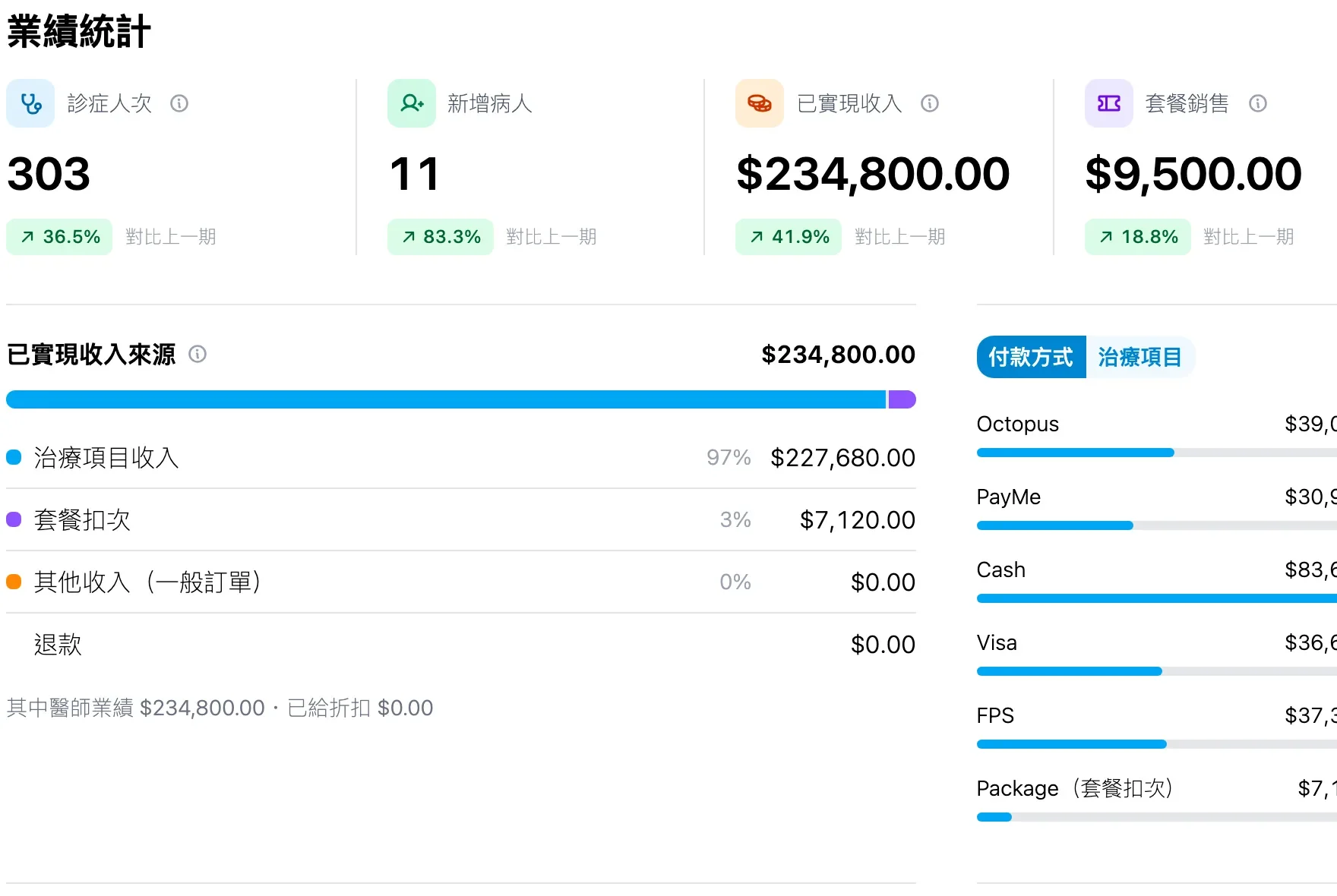
Reports should show revenue by month, week or day, broken down by practitioner, payment method and treatment. Medicloud lists realised revenue and package prepayments separately, compares with the previous period and exports to Excel or Word.
-
Staff permissions
Permissions should follow roles, so reception handles appointments and billing only. Medicloud lets you choose what each role may do and limit a staff member to the patients assigned to them.
Cloud or installed software
TCM clinic systems come in two kinds: software installed on the clinic's computers, and cloud systems you sign in to through a browser. Both handle daily work; they differ in where the data sits, who maintains it and which devices you use.
-
Where data sits and who maintains it
Installed software keeps data on the clinic's computer or server, backed up and repaired by the clinic. A cloud system keeps it on the vendor's servers, maintained by the vendor. Medicloud stores Hong Kong clinics' data on Amazon Web Services (AWS) servers in Singapore, and every connection uses HTTPS.
-
Where and on which devices
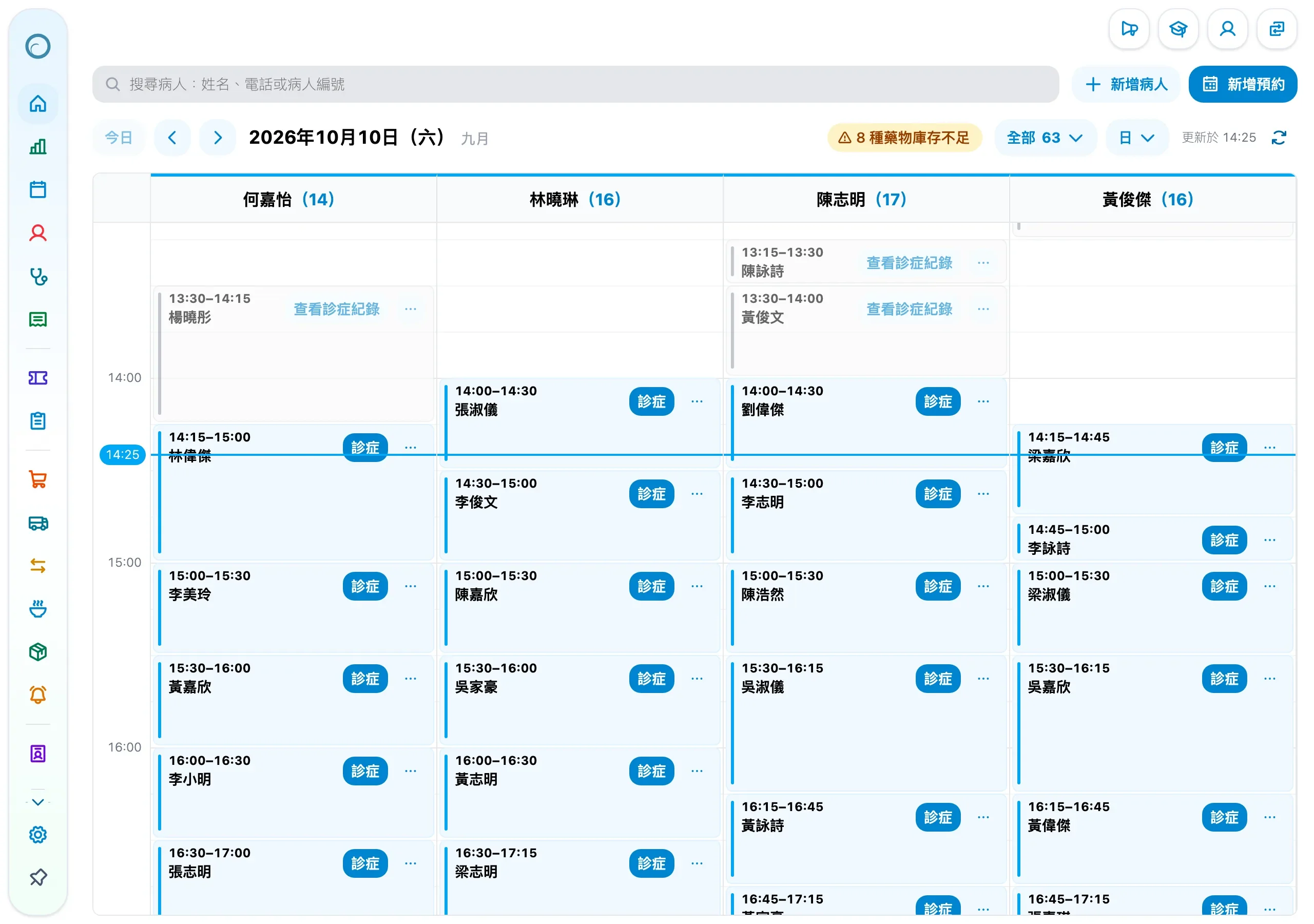
Installed software runs on the computers it is installed on. A cloud system works in the browser on a computer, tablet or phone, so a practitioner can check appointments from home.
-
Updates and costs
When comparing quotes, ask whether there is a licence or installation fee per computer and whether updates cost extra. Medicloud runs in the browser, is not charged per computer and updates itself.
To see how clinics use it on a phone or tablet, read using the TCM clinic system app.
Switching from paper or another system
Data usually takes the most time. Start with three lists: patients, herbs with opening stock, and charge items; old records can follow in batches. Run old and new side by side for a while, write the first prescription, then move the rest of the work across.
Medicloud imports your data for free: we first review your existing data and switching needs, then arrange the import with you, including sessions patients have left on packages in a previous system.
Tell us how your clinic works and we adjust receipt, certificate and prescription layouts, fields and workflow settings for free. New features your clinic needs, we also develop for free. For larger features, we first agree with you on feasibility and timing.
The how-to guides show how each everyday task is done in Medicloud.
Records, privacy and eHealth
Patient details are personal data, so check where a system stores them, whether connections are encrypted and what each staff member can see. Medicloud stores passwords as salted hashes, never as text, locks an account for a while after repeated wrong passwords, and opens uploaded files only through links that expire within an hour.
eHealth, Hong Kong's Electronic Health Record Sharing System, is joined by each healthcare provider itself; registration is free and online. eHealth registration and use take place in the government's own system; see the eHealth website for details.
Can a clinic get funding for a TCM clinic system?
The Chinese Medicine Development Fund's A1-4 scheme (改善中醫診所設施資助計劃) lists TCM clinic software among the items it funds. It can fund up to half of a year's software cost, and the Fund decides eligibility and amounts.
Anything bought before approval is not funded, so a clinic can apply during its free trial and subscribe after approval. See the A1-4 application steps.
A checklist for choosing a TCM clinic system
These questions apply to any vendor. During a trial, run your clinic's usual prescriptions and workflow through each one.
- 1
Prescribing speed
Can you find herbs by pinyin or Jyutping, and load common prescriptions in one click?
- 2
Stock linked to prescribing
Does saving a prescription deduct stock, and can you order from your own suppliers?
- 3
Receipts and certificates
Can you print receipts, insurance invoices and sick-leave and attendance certificates with your clinic details, chop and signature?
- 4
Branches and permissions
Can branches share one account, and can permissions follow roles?
- 5
Reports
Can you see revenue by practitioner, payment method and treatment, and export it to Excel?
- 6
Installation and devices
Do you need to install software or keep a server? Does it work on a tablet and phone?
- 7
Data import
Can your existing data be imported, and does that cost extra?
- 8
Pricing
Does one price include every feature? Do extra accounts, branches, training or customization cost more?
- 9
Trial
Can you try it free first, and does the trial need a credit card?
Medicloud's answers are on the features and pricing pages. To compare kinds of systems item by item, see the TCM clinic software comparison.
Frequently asked questions
How much does a TCM clinic system cost?
Vendors charge in different ways, so count licence, installation, extra account and customization fees when comparing. Medicloud costs HK$500 per clinic per month, or HK$4,500 a year, including every feature and 10 staff accounts; contact us if you need more accounts. The first 3 months are free, with no credit card.
Is there a free TCM clinic system?
Medicloud has a free 3-month trial with every feature and no credit card. After the trial, you decide whether to subscribe monthly or yearly.
Can a TCM clinic system work on a phone or tablet?
Yes. Medicloud runs in the browser on a computer, tablet or phone, and the layout fits the screen. You can also add it to your home screen from the browser and open it like an app.
Does a solo practice need a clinic system?
Solo practices benefit too: prescribing, receipts and stock happen in one system, and every consultation's record can be looked up any time. One Medicloud price includes every feature, for a single clinic or several branches.
How do we start switching from paper records?
List your patients, herbs and charge items, set a go-live day and write the first prescription. Medicloud imports your data for free, and you can run old and new side by side while you switch.
Can we get funding for a TCM clinic system?
The Chinese Medicine Development Fund's A1-4 scheme lists TCM clinic software among the items it funds. It can fund up to half of a year's software cost, and the Fund decides eligibility and amounts. Anything bought before approval is not funded, so a clinic can apply during its free trial and subscribe after approval.